01.
ARTS &
COMMUNITY LEADERSHIP


TIẾNG XƯA, NGƯỜI NAY
Founder, Cultural Heritage Director
Tiếng Xưa, Người Nay was born from a simple contradiction: Vietnam possesses a rich musical heritage, yet many young people have never encountered its traditional instruments. I founded this initiative to make Đàn Đáy and Ca Trù accessible through cultural documentation, hands-on education, live performances, and digital storytelling, creating a contemporary home for centuries-old artistry.
The Forgotten Frequencies
The first time I heard Ca Trù, I thought someone had taught silence how to sing. The Đàn Đáy produced a strange, hollow sound, its three strings trembling beneath the musician's fingers like voices returning from another century. Accustomed to the precise notes of my piano, I struggled to understand its irregular rhythms and unfamiliar intervals. During an early conversation with a veteran artist, I noticed how carefully he adjusted each note, as though negotiating with an invisible companion. He explained that certain musical expressions could never be fully captured by notation. That afternoon, I discovered something unsettling: music could survive for centuries, yet still disappear within a single generation.


The Memory Keepers
A camera stood between two centuries. On one side sat a Ca Trù artist whose hands carried over twenty years of musical memory; on the other sat me, checking microphones and adjusting the recording frame. Across five interviews, I collected stories of rehearsals, forgotten performance spaces, and techniques passed between generations. Sometimes, the most valuable answers arrived after I had stopped asking questions. One artist demonstrated a delicate ornament that seemed almost impossible to reproduce. Our videos eventually reached over 10,000 viewers per episode, but the numbers felt secondary. I had entered those conversations hoping to preserve music. Instead, I learned that preservation begins by listening to the people who keep it alive.


Seventeen New Strings
Seventeen students sat before seventeen unfamiliar instruments in a classroom in Hưng Yên. Their first attempts at playing the Đàn Đáy sounded like scattered raindrops falling onto a metal roof. Fingers slipped, rhythms collapsed, and laughter interrupted nearly every exercise. Over twenty sessions, I guided them through the instrument's three-string structure, traditional plucking techniques, and the distinctive sounds of Ca Trù. We practiced alongside recordings of trống chầu and đào nương singing, gradually assembling fragments into recognizable melodies. Eventually, ten students completed two pieces. I remember the sudden quiet after their final notes. For once, nobody rushed to speak. An ancient musical tradition had found seventeen new pairs of hands.


The Living Archive
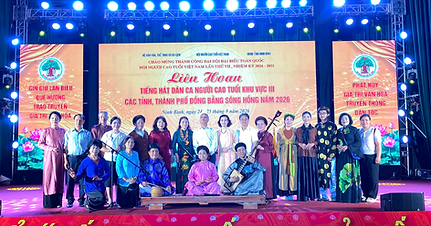
Under the stage lights, the Đàn Đáy rested against my body like a fragile conversation with history. At three national cultural programs, I performed Ca Trù pieces rooted in medieval poetry before audiences totaling more than 1,200 people. Their verses contemplated time, youth, reputation, and the fleeting nature of human existence. I found it extraordinary that words written centuries earlier could still describe feelings I recognized in myself. Every performance required restraint: a note held too long could disturb the singer's phrasing; one careless movement could fracture the rhythm. I began to understand that tradition was neither a museum exhibit nor an untouchable relic. It was something living, changing, and breathing through those willing to perform it.


The Digital Afterlife
For thirty-seven minutes, a centuries-old art form traveled through cameras, cables, and invisible digital signals. Directing the “Sắc Phách Yên Nghĩa” livestream for the Yên Nghĩa Ward People's Committee, I coordinated sixteen artists, ten performances, and a live audience interaction session. Behind the cameras, I watched ancient rhythms become waveforms on a monitor while 5,400 viewers encountered Ca Trù through their screens. A viewer's question could travel instantly to an artist whose knowledge had taken decades to acquire. That contrast fascinated me. Technology could never replace the warmth of a live performance, but it could carry its echoes beyond geographical boundaries. Perhaps heritage does not need to resist the future. Perhaps it needs new ways to resonate.


Independent Vietnamese Music Heritage Researcher
The Missing Sound
I began this research with an uncomfortable question: why did the Đàn Đáy, an instrument so essential to Ca Trù, seem almost invisible beside the singer? During one listening session, I replayed a recording with my eyes closed, separating the voice, phách, and trống chầu in my mind. Beneath them, the Đàn Đáy seemed to breathe rather than perform. Its sparse, low notes created space for everything else. I wanted to understand this quiet authority, where an instrument's importance could be measured by what happened around it.


The Art of Listening
The strangest discovery came when I stopped treating Ca Trù as music alone. Studying the dialogue between the đào nương, kép đàn, and quan viên, I realized that a single drumbeat could carry an artistic judgment. The listener was also a participant. This inspired my framework of Cultivated Artistic Appreciation, connecting aesthetic judgment, cultural knowledge, and preservation. UNESCO's 2009 recognition gave the research greater urgency. I came to believe that safeguarding Ca Trù meant protecting more than instruments and melodies. It meant preserving the ears capable of understanding them.


RU ÂM
Founder & Music Program Lead
The Unspoken Language
My first sessions with children with autism or ADHD challenged almost everything I understood about teaching piano. Some children covered their ears when unfamiliar notes sounded; others repeatedly pressed the same key, fascinated by its vibration. Instead of beginning with sheet music, I began observing their responses to different sounds. Drawing on my adaptive-audio system, I experimented with personalized listening experiences before introducing simple piano exercises. Across twice-weekly sessions with fifteen children aged five to ten, I gradually learned to recognize small signals of engagement: a finger returning to the keyboard, a child waiting for the next note, or a smile following a familiar melody. Their reactions taught me that communication does not always require words.


The Rhythm Within
One afternoon, a child who usually avoided structured piano exercises began repeating a short three-note melody without prompting. I resisted the temptation to interrupt with corrections. Instead, I played a gentle accompaniment and allowed the melody to develop at its own pace. Moments like this gradually reshaped Ru Âm's approach to music education. Over twelve months, I adapted exercises to individual attention patterns, sensory preferences, and emotional responses, helping five children develop foundational piano skills. Progress rarely followed a predictable sequence, and conventional measures of achievement often overlooked meaningful changes in participation. I came to understand that the purpose of personalized music education was not to make every child perform identically, but to discover how each child could participate confidently.


The Memory Archive
At FDC Nursing Home and the 108 Military Central Hospital, I discovered that music could reach places where ordinary conversations sometimes failed. During one piano session, an elderly woman began humming a pre-war melody before I finished playing it. She struggled to remember recent events, yet the song seemed to return her to another chapter of her life. Over eighteen months, I organized monthly sixty-minute sessions for more than seventy elderly residents and patients, alternating between classical compositions, Vietnamese folk music, and familiar songs from their youth. Approximately 90% reported improvements in sleep, mood, or memory recall. What stayed with me, however, was the realization that music could preserve fragments of personal history that time had almost erased.


GỐI
Composition/Production Director
The Anatomy of Chaos
Fifteen musicians, fifteen different instincts, and one rehearsal room that rarely agreed on anything. That was Gối. As Vice President and Head of Music and Composition, I discovered that conducting a band sometimes meant negotiating with beautiful chaos. During one rehearsal, the electric guitar swallowed the vocals while the drums raced ahead of my piano. Instead of demanding another repetition, I opened Logic Pro and began dissecting the arrangement, instrument by instrument. Later, remixing Và Thế Là Hết and 1001 Chìa Khóa Bạc taught me to bend familiar melodies into unfamiliar shapes. Two commercial releases eventually earned $700, but the greater revelation was that musical leadership required neither the loudest instrument nor the strongest personality, only the ability to make differences coexist.





Silence Between Notes
We named our concert The Silence, although silence was the one thing we could hardly afford. At Hanoi Rock City, preparations unfolded like an elaborate experiment in controlled disorder: fifteen songs spanning Pop, Rock, R&B, and Jazz, instruments awaiting soundchecks, and musicians rehearsing their entrances backstage. I remember imagining the audience hearing a seamless performance, unaware of the countless corrections hidden beneath each transition. When more than 300 people finally filled the venue, every note carried the weight of months of preparation. The concert generated $1,930 in ticket revenue, but its most valuable outcome was less tangible. I learned that production was the architecture of anticipation, where pauses, transitions, and even imperfections could shape an audience's emotions. Sometimes, the most powerful music begins before anyone plays.


Vietnam Community Support Camp
Glocal Ventures Inc.
Camp Coordinator & Service Team Lead
In Khau Pha, my physics classroom had no laboratory, only curious students and the mountains beyond our windows. During one lesson, I used a swinging object to explain oscillation, inviting students to predict its motion before introducing the equations. Their guesses sparked a conversation that no textbook could have scripted. Across five sessions, I taught 38 ethnic-minority students, all eventually scoring above 8/10. At Birla Senco Village, I also organized outdoor activities for 45 children and coordinated musical exchanges with six American student musicians. Translating between languages and experiences taught me something unexpected: education becomes most powerful when knowledge travels in both directions.


In Sapa, I exchanged my notebook for a shovel. For ten days, our team of 35 volunteers carried 1.2 tons of construction materials, mixed 3.5 cubic meters of concrete, and helped build two semi-permanent homes for struggling families. My hands grew sore, and mountain rain repeatedly interrupted our progress. Yet watching bare foundations become walls gave every exhausting afternoon a tangible purpose. We also distributed 50 kilograms of seeds and worked alongside farmers across 7,200 square meters of agricultural land. Unlike a school project, our work could not end with a presentation. It had to withstand weather, time, and everyday life.


Accessible Technological Engineering Club
Academic Director
A robot refusing to move taught me more about accessibility than any perfectly functioning machine. At a STEM workshop in Ninh Binh, I watched students crowd around a small robot, debating why its wheels ignored their commands. Instead of fixing the code, I asked them to trace each instruction themselves. Their excitement when the robot finally moved reminded me why I joined the Accessible Technological Engineering Club: technology should never belong exclusively to those fortunate enough to access it. As Academic Director, I guided five members in developing over 20 Python, AI, and engineering lessons, reaching 300 students. We also brought robotics activities to disadvantaged children in Yen Bai and Da Nang, where simple LEGO components became miniature laboratories of possibility. Meanwhile, researching sensor-assisted mobility for people with brain injuries challenged my understanding of engineering. I began to see accessibility not as an additional feature, but as the very foundation of meaningful invention.


Ams Chess Academy
Head of Operations & Chess Coach
Chess had always fascinated me because sixty-four squares could contain more possibilities than I could ever calculate. Yet at Ams Chess Academy, I discovered an even stranger game: organizing the people who played it. During the Hanoi Summer Chess Championship, more than 700 young competitors arrived carrying chessboards, water bottles, and carefully rehearsed openings. Behind their concentration stood twenty organizers, a $3,100 operating budget, and $4,600 in prizes. I remember rushing between registration desks and tournament rooms, resolving scheduling problems while parents anxiously searched for their children's names. Between rounds, I sat beside U10 players, replaying their mistakes and asking them to explain moves they wished they could undo. One boy was devastated after losing his queen; rather than offer consolation, I showed him how his earlier pawn structure had already weakened his position. That summer, I learned that leadership resembles chess itself: the most consequential moves often happen long before anyone notices the danger.


My second education in chess took place beyond the tournament board, where persuasion, improvisation, and responsibility became pieces with no fixed movements. Preparing the Hanoi Chess Open, I helped secure 100 sponsored chess sets from the Vietnam People's Army Chess Team and invited Vietnamese Grandmaster Bui Vinh as a technical advisor. During the competition, I served as an arbiter, discovering how difficult impartiality becomes when a single ruling can disappoint someone who has practiced for months. Earlier, our Harry Potter-themed booth at Ams Club Fair had taught me another lesson: chess could attract people through imagination rather than competition alone. We transformed a $700 budget into interactive challenges that drew over 300 students and more than 100 membership registrations. I still remember visitors laughing over oversized chess puzzles before asking how to join. Those encounters changed my understanding of the game. Chess was no longer merely an intellectual contest; it had become a language through which strangers could find common ground.


